

Overview
GLOW contains GHK-Cu, BPC-157, and the TB-500 fragment. GHK-Cu is studied for collagen synthesis and MMP-2 expression in fibroblast cultures. [1]
Identity
| Material class | Multi-compound blend |
|---|---|
| Components | GHK-Cu, BPC-157, TB-500 |
| CAS number | See individual components |
| Molecular formula | See individual components |
| Molecular weight | See individual components |
| Reference compound | GHK-Cu (neutral 1:1 prezatide copper complex) |
|---|---|
| CAS number | 89030-95-5 |
| Molecular formula | C14H22CuN6O4 |
| Molecular weight | 401.91 g/mol |
| Source | PubChem CID 10111685 |
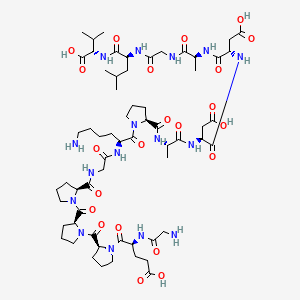
| Reference compound | BPC-157 |
|---|---|
| CAS number | 137525-51-0 |
| Molecular formula | C62H98N16O22 |
| Molecular weight | 1419.5 g/mol |
| Source | PubChem CID 9941957 |
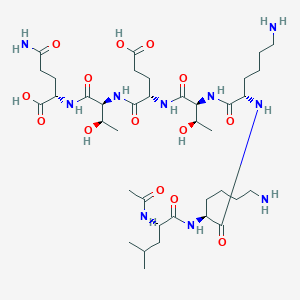
| Reference compound | TB-500 (published acetylated fragment) |
|---|---|
| CAS number | 885340-08-9 |
| Molecular formula | C38H68N10O14 |
| Molecular weight | 889.0 g/mol |
| Source | PubChem CID 62707662 |
Published research
GHK-Cu
The copper complex is the constituent examined in the matrix studies. Collagen synthesis measures the production of new protein. MMP-2 and its inhibitors concern the machinery that remodels existing material. These endpoints can change together, so more collagen synthesis in a dish does not reveal the net amount retained in tissue. A study that also included hyaluronic acid tested a different formulation from this blend.
Cell study · Matrix production
GHK-Cu increased collagen synthesis in cultured fibroblasts independently of changes in cell number. [1]
Cell study · Matrix turnover
The researchers found increased MMP-2 and its inhibitors TIMP-1 and TIMP-2, supporting a role for GHK-Cu in matrix remodeling as well as matrix production. [2]
Read the full GHK-Cu overviewBPC-157
The BPC-157 work separates three processes that might otherwise look similar in an explant: cells can move farther, more cells can survive, or cells can become more responsive to another signal. The original experiments used tendon-derived material. Their findings identify properties of BPC-157 in those preparations and provide no direct measurement of how the other ingredients affect those properties.
Cell and explant study · Migration versus survival
In rat tendon explants and fibroblast cultures, BPC-157 increased cell outgrowth, migration and survival during oxidative stress, with migration accompanied by activation of FAK and paxillin. [3]
Cell study · Growth hormone receptor expression
The researchers found more growth hormone receptor RNA and protein after BPC-157 exposure. Adding growth hormone to the pretreated fibroblasts increased proliferation-associated readouts and activated JAK2. [4]
Read the full BPC-157 overviewTB-500
The GLOW formulation contains the acetylated seven-residue fragment. Its shorter breakdown products are chemically distinct, and the distinction mattered in a direct comparison. Measuring activity after a peptide has been exposed to a biological system raises a question about which molecule remained present when the outcome was assessed. The parent-versus-metabolite comparison below addresses that question for the isolated fragment.
Analytical study · Identifying the fragment
The investigators identified the acetylated seven-residue sequence Ac-LKKTETQ in the TB-500 preparation they analyzed. [5]
Cell study · Parent fragment and metabolites
The investigators detected no cytotoxicity from the parent or its tested metabolites under the assay conditions. The parent fragment showed no significant increase in fibroblast gap closure relative to the control, whereas its shorter metabolite Ac-LKKTE produced a small, statistically significant increase. [6]
Read the full TB-500 overviewWhere the evidence stands
For GLOW, isolated GHK-Cu increased collagen synthesis and matrix-remodeling markers, and isolated BPC-157 increased tendon-cell migration and survival. The TB-500 study found a difference between the parent fragment and a shorter metabolite in a scratch assay. No study cited here tested the three-component GLOW mixture, so these findings do not establish a combined effect. [1] [2] [3] [4] [5] [6]
Frequently asked questions
How do I read a blend reference?
Check whether the paper characterized the complete mixture, an individual compound, or an analytical method.
Can a blend name establish its chemical identity?
A scientific identity depends on a defined composition and the evidence for that composition.
References
- GHK-Cu and collagen synthesis in fibroblast cultures | FEBS Lett, 1988
- GHK-Cu and MMP-2 in fibroblast cultures | Life Sci, 2000
- Tendon-cell migration and survival | J Appl Physiol (1985), 2011
- Growth hormone receptor expression in tendon fibroblasts | Molecules, 2014
- TB-500 fragment identification and metabolism: analytical study | J Chromatogr A, 2012
- TB-500 fragment metabolism and fibroblast assays | J Chromatogr B, 2024
Interested in Researching GLOW?
View GLOW in PURUS Research Catalog.